
What is sheet metal fabrication?
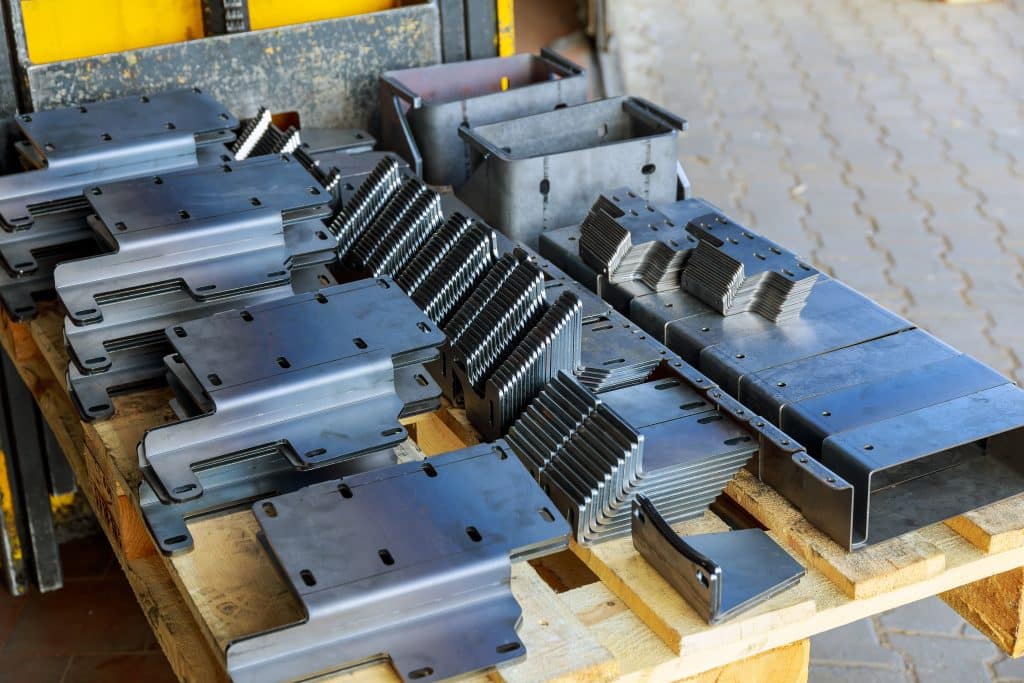
Sheet metal fabrication turns flat sheet metal into useful products.
Sheet metal parts are cost effective and why it’s used in many applications. Think fridge, stove, washer, dryer, lighting, cars, HVAC systems, furnaces, kitchen appliances, TV wall mounts, EV charging stations, and other equipment, you name it.
Choosing the right material
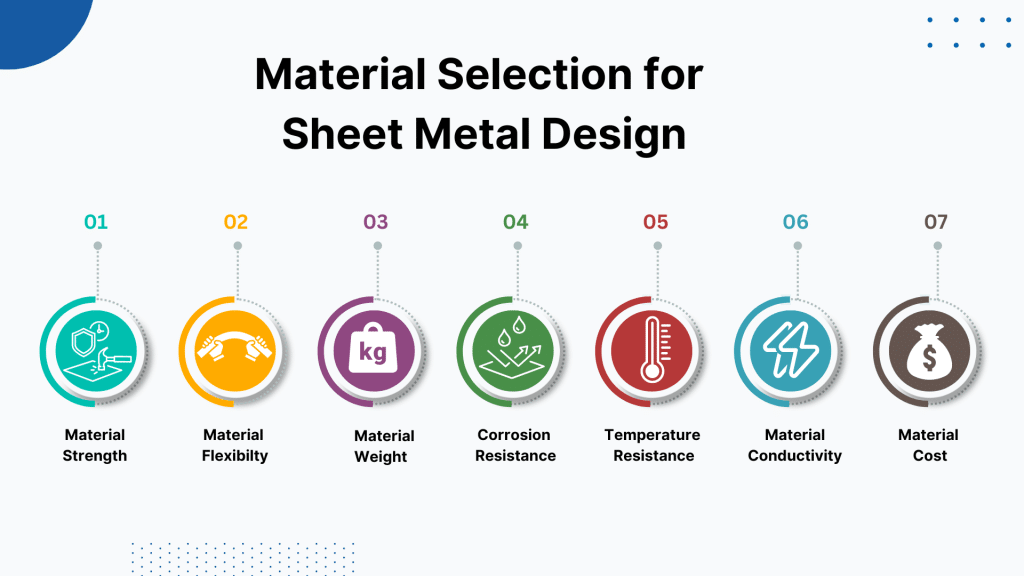
Selecting the right material is essential to quality and longevity of your applications. Here are 7 factors to consider when choosing the right material.
Key factors
- Strength: Durability and load-bearing capacity.
- Flexibility: How easily the metal can be shaped without breaking.
- Conductivity: Important for applications requiring electrical or thermal conductivity.
- Weight: Influences the ease of handling and overall weight of the final product.
- Corrosion Resistance: Essential for longevity, especially in harsh environments.
- Temperature Resistance: Ensures performance under extreme conditions.
- Material Cost: Different materials, thicknesses, and properties have different costs.
Popular materials
Stainless Steel
- Properties: Provides excellent corrosion resistance mainly due to chromium content.
- Applications: marine, chemical environments, kitchen appliances, and food processing machinery.
Galvanneal
- Properties: Enhanced corrosion resistance due to its zinc-iron alloy coating, designed to provide exceptional bonding with paint.
- Applications: construction, automotive, and outdoor applications.
Galvanized Steel
- Properties: Coated with a layer of zinc to enhance corrosion resistance.
- Applications: construction, automotive, and outdoor applications.
Carbon Steel
- Properties: Very popular due to its strength, durability, low costs, and readily accepts paints.
- Applications: industrial and consumer applications.
Aluminum
- Properties: High strength-to-weight ratio, excellent corrosion resistance.
- Applications: cookware, electronic devices, chemical equipment and architectural applications.
Copper
- Properties: Superior electrical and thermal conductivity, good corrosion resistance.
- Applications: Electrical wiring, heat exchangers, plumbing.
Titanium
- Properties: High strength-to-weight ratio, outstanding corrosion resistance.
- Applications: Aerospace, medical devices, and chemical processing.
Fabrication processes
Depending on your application, there are various sheet metal fabrication processes that can be employed. Each plays a specific role in shaping and forming the metal as required.
Cutting
The first step in sheet metal fabrication is to cut the metal into the desired shape and size. Cutting methods include:
- Laser cutting: Uses a high-powered laser to cut precise shapes with clean edges. This is often the preferred method, as it is quick, precise, and guarantees good results. Most modern lasers can cut up to 1” thick material.
- Plasma cutting: Uses a plasma torch to cut through conductive metals. This is often used with thicker materials from 10mm thickness and upwards, where precision or edge quality is of lesser importance.
- Shearing: A process that uses a blade to make straight cuts without burning or melting the metal.
Bending
Unless your component is flat, bending is required. This involves deforming the metal to form a specific angle or shape without breaking it. It usually involves using a CNC press brake or an automated panel bending machine to clamp the metal to bend it.
Forming
This is the process of shaping metals into complex three-dimensional forms. Techniques include:
- Metal stamping: A die is used to press or punch the metal into a specific shape. This is often used for mass production. When you have large annual volumes, it’s the most economical option.
- Draw & deep draw: A sheet metal blank (of the required size) is stretched into a die to form a deep, hollow shape. This is common for manufacturing items like cans and kitchen sinks, which require a hollow shape.
- Spinning: A lathe spins the metal while a tool shapes it; usually limited to create cylindrical shapes.
Joining
Once shaped and formed, metal parts are often joined together. Common methods include:
- Spot welding: Uses pressure and heat from an electrical current, bonding sheet metal surfaces at specific spots.
- Welding: Uses high heat to melt and fuse pieces of metal together.
- Clinch joining*: Or press-joining is a process used to join two pieces of sheet metal together without any fasteners.
- Fasteners*: A rivet, screw, other type of fastener is affixed to the material, or inserted into a hole and deformed to hold the parts together permanently.
*These processes allow for dissimilar metals to be joined together.
Finishing
Depending on the material, the final step in the fabrication process may be finishing to enhances the surface protection, appearance, and/or functionality of your sheet metal product.
This often involves surface preparation and adding another layer of durability; whether it’s painting, powder coating, or aluminum anodizing. These final steps offer a smoother texture, can improve corrosion resistance, and enhance visual appeal.
Applications
Sheet metal parts are used in many industries due to its durability, malleability, and cost-effectiveness. Here are some industries and use cases.
HVAC/R: duct work, air handlers, furnaces, heat exchangers, chillers, brackets and supports, registers, vent hoods, refrigeration units.
Electronic vehicles (EV): battery enclosures, heat sinks, electrical connectors, electromagnetic shielding, brackets, and supports.
Consumer goods: refrigerators, ovens, microwaves, washing machines, modern furniture, cookware, lighting fixtures, etc.
Electronics: housings for electronic devices, heat sinks, electrical connectors and electromagnetic shielding components, battery enclosures and more.
Medical: surgical instruments, diagnostic equipment, medical equipment such as MRI machines, X-ray machines, lab instruments, hospital furniture, even orthopedic implants.
Construction: roofing and siding, HVAC systems, structural and architectural features in general construction.
Lighting: light fixtures, downlight parts, IC boxes, plaster frames, driver boxes, junction boxes, bar hangers and mounting brackets.
Automotive: exterior panels and framework of vehicles, exhaust systems, EV charging stations, battery casings, and many engine parts.
Aerospace: fuselage and wings of aircraft, engine components, satellite panels, and spacecraft structures.