
What does a sheet metal fabricator do?
A sheet metal fabricator turns your drawings into finished metal products. They use a variety of tools, machines, presses, and skilled operators to cut, bend, form, weld, and finish metal, so it meets your specs and works as intended.
The truth is not all fabricators are created equal. Many fabricators will just quote what’s on the drawing and call it a day. While some will take the time to review your drawings, understand your application, and suggest cost-effective ways to produce them.
In the manufacturing world, we call this Design for Manufacturability (DFM) and it drastically impacts overall costs. While some design changes can shave off a few cents off per unit, other can shave off dollars. This is a huge leverage point.
Sheet metal fabrication processes
Sheet metal work is technical. Depending on your part’s shape, size, features, quantities, there are various sheet metal processes that can potentially work.
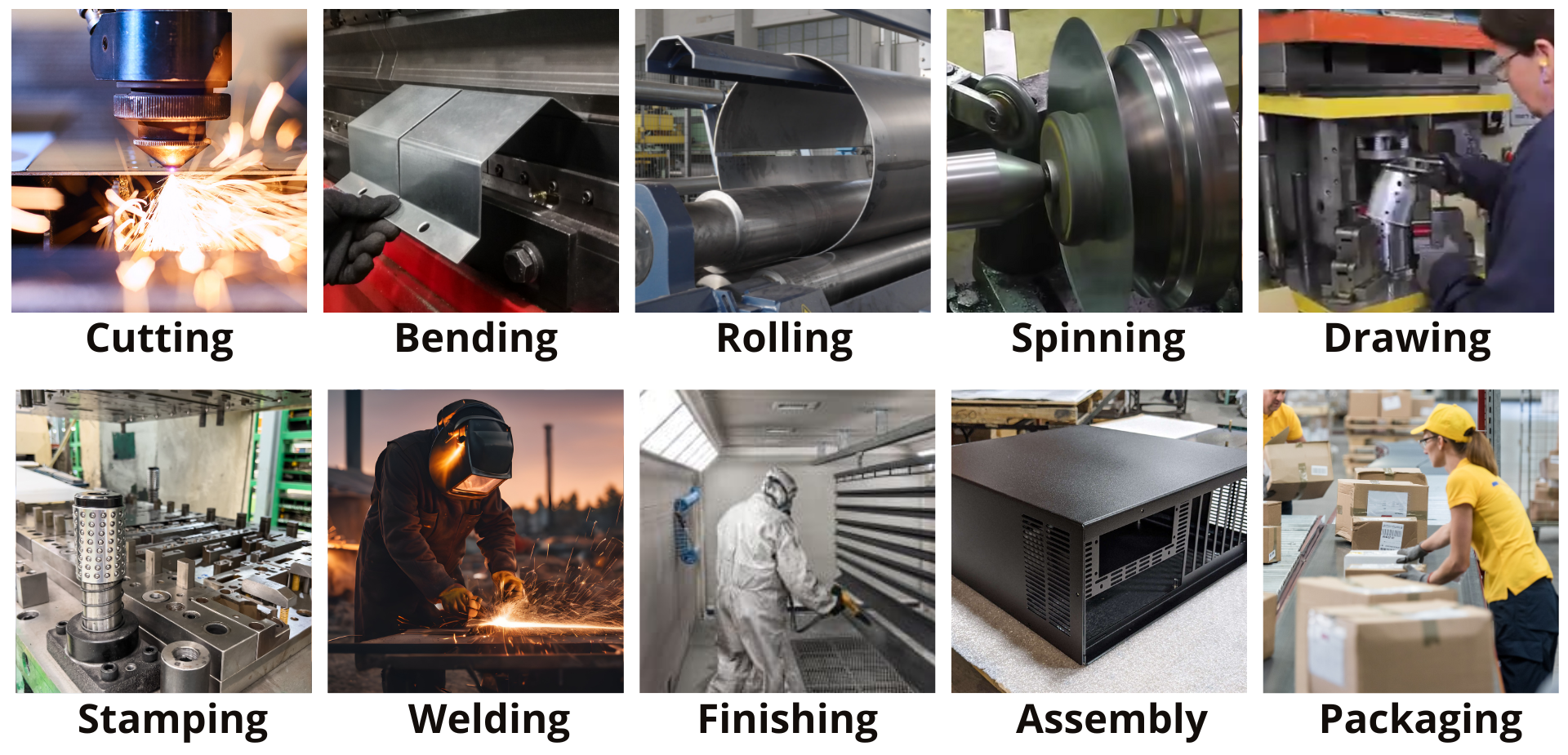
The common processes are:
- Cutting: CNC laser, water cutting, or plasma
- Bending: press brakes and dies shape the geometry
- Rolling: forming curves
- Spinning: rotates and shapes round parts
- Stamping: high-speed forming with custom dies (mid to high volume)
- Drawing: stretches sheet into deep, seamless shapes (mid to high volume)
- Welding: MIG, TIG, spot welding
- Finishing: paint, powder coat, plating, anodizing
- Assembly: adding fasteners such as screws, rivets, PEM nuts, and other hardware
- Packaging: protects parts in transit or consumer-ready packaging
- Logistics: handle client-side shipping and free shipping on volume orders
And every shop is limited by their processes and current equipment. Thus, every shop has its own inherent capabilities, specialties, and constraints. And this varies greatly from shop to shop.
Types of fabricators
There are different fabricators for different production needs.
If you need onesies and twosies, there are prototyping shops and some general fab shops that can do this work. While large production shops focus on delivering commercial volumes in the thousands and millions of units, all while offering the best prices.
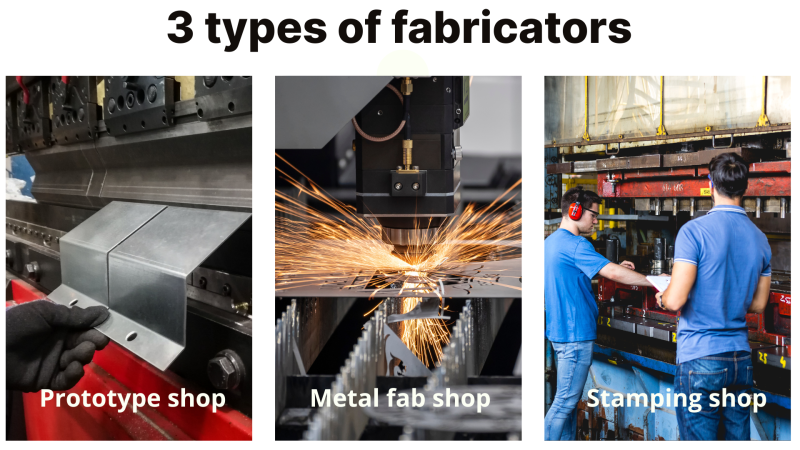
Prototyping shops
- Quantities: 1-100 units
- No minimums, limited machines, premium prices
- Perfect when starting out or need prototypes
Metal fabrication shops
- Quantities: 50-3000 units
- Limited processes: CNC machines, press breaks, some soft tooling
- Hyper localized and competitive
- Perfect as you are building out demand
Metal stamping houses
- Quantities: 1000s to millions of units
- Processes: CNC machines, press breaks, stamping presses, hard tooling, hybrid manufacturing (CNC + stamping), in-house tooling (or subcontracted)
- Perfect when you have stable products with growing quantities
When to work with a fabricator
There are many reasons to work with fabricators, including:
- Building new products
- Going from prototype to production
- Localizing or derisk your supply chain
- Quoting a job that needs compliance-ready parts
- Trying to reduce cost per unit or consolidate vendors
The right fabricators have the right equipment, knowledge, and experience you need. Some industries are highly regulated – like lighting, HVAC, automobile, and aerospace – and require UL, ISO, NEMA, ISO or other standards. A competent fabricator will know how to build to those standards and can help you avoid certification bottlenecks.
What to look for in a partner
The most important questions are:
- Clients, capabilities, certifications?
- Do you see any ways to reduce design costs?
- Do you offer engineering or CAD modeling services?
- Which processes do you specialize in vs. subcontract?
- Do you make your own tooling or outsource it?
- If there is a mistake, who pays for it?
- What are your lead times?
Tip: You want a partner that understands your industry, parts, and priorities.